Showing posts with label Book Review. Show all posts

Monday, March 7, 2016

From the CETL Library: My Freshman Year: What a Professor Learned by Becoming a Student


Have you ever wondered what it would be like to be a student again?  Maybe you’ve contemplated the ways in which the world of education has changed since you left it as a student and entered it as an educator.  Perhaps the frustrations of watching your students’ strange habits, their seeming disinterest in your course, or their apparent lack of priorities have made you wonder what the heck is going on in their minds.  Rebekah Nathan wondered the same things.

“After more than fifteen years of university teaching, I found that students had become increasingly confusing to me.  Why don’t undergraduates ever drop by my office hours unless they are in dire trouble in a course?  Why don’t they respond to my (generous) invitations to do out-of-class research under my guidance?  How could some of my students never take a note during my big lecture class?  And what about those students who bring whole meals and eat and drink during my class?  Or those other students who seem to feel absolutely no embarrassment in putting their head or their feet on their desk and taking a nap during class?”

Teaching was becoming more difficult for Rebekah as understanding her students became more difficult.  She was faced with the challenge of attempting to teach to a population that was slowly becoming foreign to her.   So, as an anthropology professor and researcher, she decided to take things into her own hands and conduct a year-long research project in which she enrolled as a freshman student at the very university she worked at.

My Freshman Year is the result of her research findings through this study, and explores habits, routines, thought processes, and priorities of the college students she was surrounded by.  During her time spent as a student, she observed the ways that students handled stressed and balanced their schedules, she interviewed them on their professors and classes, and she participated in all aspects of the college life including classes, movie nights, residence hall activities, intramural sports, and living in the dorms.  Her results are certainly eye opening as well as entertaining.

To read more about Rebekah Nathan’s experience, head over to the CETL library and pick up a copy of My Freshman Year: What a Professor Learned by Becoming a Student from the “Understanding the Student” section.

Written By: Jessica Moser

Monday, December 14, 2015

From the CETL Library: Look Me in the Eye: My Life with Asperger's


“To this day, when I speak, I find visual input to be distracting. […] That’s why I usually look somewhere neutral—at the ground of off into the distance—when I’m taking to someone.”

Published in 2007, this book isn’t one that is necessarily new to the scene of studies on autism spectrum disorders.  However, John Elder Robinson’s first-hand account of living with Asperger’s syndrome provides interesting insight into the learning experiences, struggles and accomplishments that accompany such a disorder.

As you may already know, Asperger’s syndrome was originally discovered in 1981 by Hans Asperger.  It was later added to the Diagnostic and Statistical Manual of Mental Disorders in 1984 on the premises of Hans’ observations that children who were often intelligent with above average vocabulary skills exhibited autistic behaviors with pronounced deficiencies in social and communication skills.  Since then, research on Asperger’s and autism has expanded vastly, with recent findings discovering 1 in 150 people fall somewhere on the autism spectrum.  (Asperger’s was removed as a specified autism disorder in 2013, and was replaced with a diagnosis of an autism spectrum disorder ranked on a severity scale.)

Why is this important to note?  Teachers are consistently told that they should get to know their students in order to build stronger rapport in their courses, thus increasing student motivation, participation, and achievement.  There’s no question that John Elder Robison’s autobiographical lens can be helpful to understanding autism spectrum disorders as he describes his own experiences growing up with the disorder, and thus lead to a deeper understanding of how to best reach students outside of the “neurotypical” population.

Most importantly, John Elder Robison’s story strengthens the need for differentiated instruction in classrooms.  Considering the best ways to understand, appreciate, and build upon student differences is one of the key ingredients to differentiating your curriculum, and getting a glimpse of a behind the scenes story provides a good way to gauge how to implement those concepts in your own ways.

A great read for those who are looking for a stronger understanding of their population of students, or are interested in reading a funny, descriptive, and memorable first-hand account of someone’s own experiences with an autism spectrum disorder.

Look Me in the Eye: My Life with Asperger’s can be found in the “Understanding the Student” section of the CETL library.

Review Provided By:  Jessica Moser

Monday, April 6, 2015

Dr. Eric Jamelske on Simulations


Biology classes have labs; social work classes have case-studies; economic classes have market simulations. Dr. Eric Jamelske, Department of Economics, speaks to the importance of including simulations in the classroom:

I think any activity that allows for simulation is really useful. If I want to get students to really understand how markets work, the best way is for them to actively simulate a real market, by participating as buyers and sellers. In Economics we have a lot of graphs, and if there’s a way I can bring a graph to life –let the students actively discover how equilibrium is derived—I think it sticks a lot more. Not every day has to have an activity, but I keep three or four on reserve to use over the course of a semester.

To read more on learning simulations, consider checking out The Gamification of Learning and Instruction by Karl M. Kapp, a book that provides strategies on designing and implementing game-based learning. We have it here at the CETL library. 


Thursday, November 6, 2014

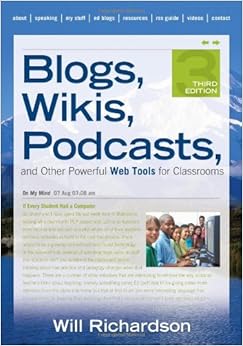
Blogs, Wikis, Podcasts, and Other Powerful Web Tools for Classrooms – Will Richardson

The internet has revolutionized many things, spanning from how we eat popcorn to how we view cats (though if you’re like me, no amount of transmission lines, wireless signals, or optical fiber could change how I feel about cats.) Among the many things the internet has completely reworked is reading and writing: there are now modes of written information that can be viewed, recreated, and theorized that didn’t exist before.  Teachers have tapped into those modes as unique tools for learning integrating everything from blogs to Facebook in the classroom. If you are interested in diving into what the internet can offer for you, this book provides simple, how-to steps for teaching with:
  • Weblogs
  • Wikis
  • Really Simple Syndication (RSS) feeds and aggregators
  • Social bookmarking
  • Online photo galleries
  • Facebook, MySpace, Twitter


Tuesday, November 4, 2014

Collaborating Online – Rena M. Pallof & Keith Pratt

Online education is like an ungarnished chicken breast: it’s nourishing, comforting, but tragically disappointing without a healthy dose of spice. Collaborating Online provides faculty with examples of creative online activities that break the mold of traditional online education. If you are looking for ideas, inspiration, or ways to get students to interact in a collaborative virtual environment, this book is a fast, resourceful read.

Wednesday, October 29, 2014

Creating a Sense of Presence in Online Teaching – Lehman, Conceição


A common challenge in teaching an online course is connecting with your students: video lectures—while more flexible than traditional lectures—simply cannot recreate the same dynamic interplay of face-to-face class time. This book traces the ways in which you can create a sense of ‘presence’ in the virtual classroom, including practical samples of strategies, interactive models, and activities that will help foster a vibrant student-instructor relationship. Creating a Sense of Presence in Online Teaching can be checked out from the CETL library, and is located in the ‘Instructional Technology’ section on the bookshelf next to Cindy’s office. 

Monday, October 27, 2014

Teaching with Your Mouth Shut – Donald L. Finkel

Each chapter in this book explores a different way to teach while keeping your mouth shut. It never assumes to suggest a singular “right-way” to teach; it serves as a tool for reflection rather than as a stringent manual. With thought-provoking case studies, stories, and concise commentary, Donald L. Finkel encourages all those who have a stake in education to consider a host of new teaching possibilities, all revolving around the concepts of democratic learning and student self-fulfillment.