Showing posts with label Simulations. Show all posts

Monday, June 22, 2015

Active Learning Activities - Tom Sulzer, Information Systems

Professor Tom Sulzer, Department of Information Systems, shares his active learning activity focused on simulations:

Setting: Simulation activity utilizing pod groups (8-10 pods with 4 students per pod)

Setup for the activity: To prepare the students for this activity I had to help them install an SAP client piece of software. In addition, we talked about Enterprise Resource Planning (ERP) solutions in business and had a reading assignment associated with ERP to better help them understand what it is that ERP is about.

How the activity unfolded in the classroom: Part of the SAP curriculum is a "Distribution Game" which allows students to role play being the managers of a company that distributes water. The simulation typically lasts 3 classes and allows the students to gain experience using a real ERP system.

  • The first day, students are allowed to modify their product's price and marketing expenditures to get their products to be purchased by a simulated market. Note the market that the simulation tries to simulate is Retail Stores in Germany which is divided up into 3 regions: North, South and West.
  • In the second session, students are allowed to replenish their inventory once as well as set their product's price and amount of marketing as they did the first day.
  • In the third session, students build on what they were able to do in the previous days by having unlimited replenishment capability as well as the ability to forecast and select specific replenishment amounts. Note they still are setting price and marketing expenses as well.

After the activity: After each session, we summarized what occurred and allowed the students to share experiences, good and bad. The intent is to help them appreciate, in a safe setting, some of the real-world types of decisions that managers struggle with. While it is in a contrived scenario, the tools they use and their reactions are very close to reality.

Additional comments from instructor: "I believe that the simulation is able to drive home the use of ERP systems and allows them to get hands on experience with an actual piece of software they will potentially see in a real work environment setting."

Tip provided by: Tom Sulzer

Monday, May 4, 2015

Interactive Case Study - Dr. Pehler, Nursing

In the spring of 2014, Dr. Shelly Rae Pehler from the department of Nursing participated in a CETL Successful Teaching Practices workshop that focused on developing interactive case studies. Dr. Pehler had the idea to replicate a real-life case that involved a patient whose symptoms could easily lead the nursing staff into two different interventions (as an interesting aside, the real-life staff actually ended up choosing the wrong intervention). After a year of researching the case, drawing out concept maps, and working closely with instructional designer April Pierson and her intern Sammi Nelson to translate it into the Articulate program, Dr. Pehler was able to trial the case study in her Pediatrics course this spring.

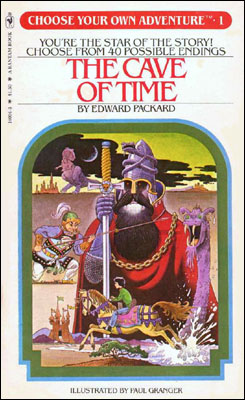
The format of the interactive case study was very much like the popular Choose Your Own Adventure Books of the 70’s: each slide presented the student with a choice that would lead them down opposing paths. Some paths provided the students with a chance for correction: while their first decision might not have been the right one, their next decision could allow them to get back on track. Consistently making the wrong decisions ultimately lead the student to the wrong plan of care for the patient. Alternatively, making all the correct decisions brought the student expediently to the correct intervention. In those cases, Dr. Pehler encouraged the students to go back and redo the case study, trying different decisions to see how the different choices will ultimately change patient outcomes.

After participating in the interactive case study, students were asked to provide feedback via a Qualtrics survey. The majority of students felt the case study reinforced course content, allowed for use of critical thinking skills, while also being fun to complete. Students unanimously voted for the creation of additional case studies to reinforce class content, and many comments centered around the desire to make the case study longer. While the resources to do so are pretty substantial—mostly in regard to time commitment—Dr. Pehler plans to add a new case study each year to her curriculum. She finds that the students really enjoy the interactive application of class material, and that case studies are personally quite fun to map out and put together.


For more information regarding interactive case studies, feel free to contact instructional designer April Pierson.

Monday, April 6, 2015

Dr. Eric Jamelske on Simulations


Biology classes have labs; social work classes have case-studies; economic classes have market simulations. Dr. Eric Jamelske, Department of Economics, speaks to the importance of including simulations in the classroom:

I think any activity that allows for simulation is really useful. If I want to get students to really understand how markets work, the best way is for them to actively simulate a real market, by participating as buyers and sellers. In Economics we have a lot of graphs, and if there’s a way I can bring a graph to life –let the students actively discover how equilibrium is derived—I think it sticks a lot more. Not every day has to have an activity, but I keep three or four on reserve to use over the course of a semester.

To read more on learning simulations, consider checking out The Gamification of Learning and Instruction by Karl M. Kapp, a book that provides strategies on designing and implementing game-based learning. We have it here at the CETL library.